
Tijl has been working at Kapernikov for 3.5 years. As a Fullstack Developer, he specializes in building intuitive interfaces for complex data management systems.
With a background in Civil Engineering (Electrical), he combines technical coding skills with a deep understanding of the physical infrastructure.
What are you working on right now?
I'm working on Asset360, a major project for Infrabel. We are setting up a comprehensive data management system for their infrastructure assets.
This covers the Asset Master Data of physical "in-field" objects like tracks, switches, signals and balises.
What is your role on the project?
I am a full-stack developer. My job is to ensure data streams flow correctly and to build the applications that use them.
We connect to various data sources within Infrabel, ingest that data, and most importantly, link the assets together correctly.
Why is this linking so important?
Data is created by various expert teams. The goal of Asset360 is to create a single, unified system that becomes the "Single Source of Truth" for all infrastructure data. By linking assets across these sources, we provide a complete picture that was previously fragmented.
What do you enjoy most about the work?
Personally, I love making things visual. It’s very satisfying to build a full-stack application where I can immediately see the result.
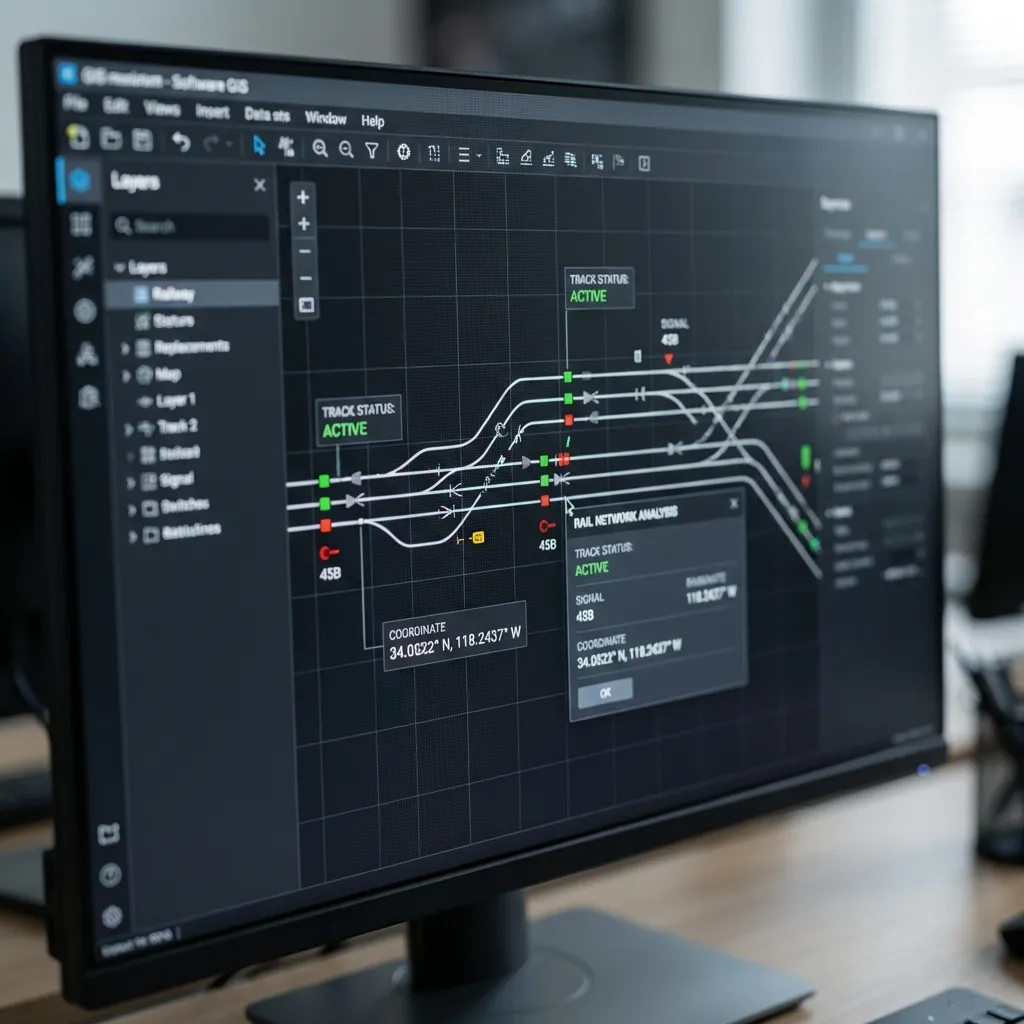
For example, creating screens where users can verify and adjust data on a map. Infrastructure assets aren't just rows in a database; they have a location. Being able to interact with that visually makes a big difference for the user.
Is visualizing railway data difficult?
Yes, definitely. You aren't just dealing with simple points on a map. The railway network is composed of linear assets with complex rules and relationships.
Translating those complex relationships into a clean, usable map interface involves a lot of complex logic in the background.
Does your background help with this?
I studied Civil Engineering with a Master's in Electrical Techniques. It definitely helps.
Railways rely heavily on electrical systems—signaling, switches, track circuits. Having that background knowledge makes it much easier to understand the data I'm working with and the physical reality behind the code.
The takeaway
A Single Source of Truth isn't just about storage; it's about accessibility. By visualizing complex asset relationships, developers like Tijl turn abstract databases into actionable tools for infrastructure managers.